


Table of Contents
If you’ve been to Lhasa only once, chances are you walked into Zaki Temple on a Wednesday. In local folklore, Wednesday is an auspicious day dedicated to Zaki Lhamo. The main hall fills with people carrying all kinds of wishes. They offer liquor, press their palms together in prayer, and soon go on their way.
The temple looks different in the early light, around six or seven in the morning. Before the crowds of visitors arrive, most of the people there are locals. Older women walk slowly, and young mothers carry children on their backs. They spend little time in the main hall and pray quietly as they follow the temple’s outer wall, making one slow circuit after another.

The sacred kora path around Zaki Temple in Lhasa, walked at dawn by local devotees.
In Tibet, this practice of walking around a sacred place is known as kora.
They walk at an even pace, moving prayer beads through their fingers as they softly repeat a set of ancient syllables. Many of the beads have acquired a soft sheen from years of handling. You can tell at a glance how long they’ve been worn.
To many visitors, Zaki Lhamo is Tibet’s well-known female protector associated with wealth, and Zaki Temple is a place to pray for prosperity and good fortune. Watching locals circle the temple day after day, I found myself wondering what they were really seeking in these repeated walks.
I often stood quietly beside the kora path and watched. Over time, I realized how far the hopes of local devotees were from the usual assumptions outsiders made.
The longer I watched, the more I came to appreciate the range of wishes people brought with them.
That gap is where this story begins. By looking at Zaki Lhamo and the Six-Syllable Mantra, we can understand the traditions behind Tibetan prayer bead bracelets and the hopes a Zaki Lhamo bracelet can carry.
1. Who Is Zaki Lhamo?
Before visiting Zaki Temple, most people hear that it is home to Tibet’s famous “goddess of wealth.”
Many visitors come to pray for prosperity. The temple is small, but it draws worshippers year-round. Some hope their businesses will thrive, others pray for steady work, and still others simply ask for their families’ safety. Over time, prayers for prosperity became the temple’s best-known association, and Zaki Lhamo came to be known beyond the local community as a goddess of wealth.
That title captures only one part of her role.
In Tibetan, lhamo means “goddess.” Zaki Lhamo was originally revered as a female protector of the Zaki area. As a protector deity, she was believed to safeguard the Buddhist teachings and watch over the community. Local devotees turn to her with all kinds of wishes, from good health, safety, and children to help with the difficulties of everyday life. Of these wishes, prosperity is the one most directly tied to making a living, which helps explain why it became her best-known association.
Several accounts of Zaki Lhamo’s origins are still told today.
One tradition describes her as a native Tibetan protector goddess within the Tibetan Buddhist lineage of female protectors. A more widely told folk story traces her origins to China’s Central Plains. In that version, she follows a prominent Tibetan Buddhist master to Lhasa, settles in Zaki, and vows to protect the Buddhist teachings and all sentient beings.
In another account, she is a woman who suffered an injustice and became a deity after her death. Other stories describe her as an emanation or attendant of a Buddhist goddess. These stories overlap, and no single version offers a definitive historical account. Together, they show how generations of devotees have imagined, understood, and passed down her story.
These retellings have given her a warmth and familiarity that make her feel close to everyday life.

Traditional representation of Zaki Lhamo, revered as a compassionate protector and guardian of prosperity.
People turn to her with worries about making ends meet, fears for loved ones, and thoughts they may find hard to share. The concerns they bring her are the daily struggles of keeping a household going and weathering life’s ups and downs.
“Goddess of wealth” is an understandable name for Zaki Lhamo, but her role reaches much further.
She embodies hopes for prosperity and serves as a protector of the community who listens to everyday worries. People come to Zaki Temple to ask for something they hope will happen. Often, the act of making that wish also gives them a place to set down what has been weighing on them.
2. The Meaning of the Six-Syllable Mantra
The six syllables people repeat on the kora path at Zaki Temple are Om Mani Padme Hum, a mantra familiar throughout Tibetan Buddhism. The Chinese characters used to render its sound are Om Mani Padme Hum. Some visitors hear it as a wish-granting formula and assume that saying it more often brings a wish closer to fulfillment.
In everyday Tibetan life, the mantra has a quieter, more familiar place.
It expresses compassion and wisdom in a few syllables and gives people who recite it a way to gather their thoughts and look inward. They may repeat it silently as they walk the kora path, turn their prayer beads, or sit with a restless mind. It is a gentle reminder to come back to the present, hold on to kindness, and steady yourself when you feel anxious, tired, or overwhelmed.
That’s why you hear it from people circling a temple and from travelers along the road. Someone holding prayer beads may begin moving them in time with the words almost without thinking. Recitation has become part of daily life, a quiet source of companionship beyond any specific wish.
The mantra also takes a form you can see and touch.
Around Tibetan temples, at mountain passes, in villages, and beside kora paths, you’ll often see stones carved with the Six-Syllable Mantra. These are known as mani stones. Carvers chisel the inscription into the surface stroke by stroke. Some stones keep their natural color, while others are painted in bright white, yellow, red, green, and blue. As the stones accumulate over time, they form mani cairns and sometimes long mani walls.
Reciting the mantra brings it into each breath. Carving a mani stone gives that same prayer a place on the land.
Every chisel mark is a silent recitation, and every stone placed on a mani cairn carries blessings, thoughts of loved ones, and hopes. Sun, wind, and rain gradually fade and weather the paint, while the words remain quietly etched into the stones of the plateau.

Sacred Six-Syllable Mantra (Om Mani Padme Hum) carved into Tibetan mani stones along pilgrimage routes.
People passing a mani cairn or wall generally follow the clockwise direction of kora as a sign of respect. The weathered inscriptions offer their own quiet reminder to slow down, settle the mind, and make room again for compassion and kindness.
3. Wearing Tibetan Symbols as Bead Bracelets
The symbols of Tibetan religious life appear in temples and on mani stones, and people also carry them into daily life on the bracelets they wear.
Two familiar examples are Zaki Lhamo and the Six-Syllable Mantra.
Zaki Lhamo often appears on a charm or as a decorative motif, expressing hopes for protection, safety, and a smoother path through life. It calls to mind the everyday wishes people bring to Zaki Temple for steady work, healthy loved ones, and something to lean on in difficult times.

Amesha Tibetan prayer bead bracelet featuring carved sacred mantras and natural gemstones.
The Six-Syllable Mantra is often engraved on accent beads, spinning beads, or metal fittings. Its words invite you to pause when life feels hectic, steady yourself when you feel uneasy, and keep kindness in mind as you go about your day.

Tibetan bead bracelets serve as tactile anchors for daily mindfulness and spiritual grounding.
On a bracelet, these symbols become part of daily life. You can see them whenever you glance down, or slowly turn the beads between your fingers when your emotions begin to rise. Over time, the bracelet can become a quiet, tangible companion.
A bracelet like this becomes a personal keepsake through years of wear. The beads take on a soft sheen as you turn them day after day, and the charm picks up small marks from use. In time, it carries something of your days, your wishes, and the life you’ve lived while wearing it.
4. Wearing and Caring for a Bracelet Respectfully
Customs around bracelets with religious imagery vary from place to place and among individual devotees.
The practices below are informal ways to treat a bracelet with care and respect. They vary among wearers, and understanding the spirit behind them matters more than memorizing each one.
A bracelet’s meaning as a keepsake comes from what it brings to mind. Turning the beads or catching sight of a mantra or motif can remind you to settle your thoughts, see things clearly, and act with kindness. Its personal value grows when you choose to wear it thoughtfully over time.
A few everyday habits can help you care for it.
- Avoid lending your bracelet out casually for long periods. With regular wear, it takes on marks that are particular to you and becomes tied to personal experiences and feelings.
- When bathing, exercising, or resting, you can take it off according to your preferences and what the materials require. Set it somewhere clean and secure.
- If the bracelet features a mantra or religious image, keep it off cluttered or dirty surfaces and handle it with care. This is a way of respecting what those symbols mean in their culture.
5. Choosing Stones That Feel Right to You
Part of what makes a bracelet meaningful is the way it stays with you and reminds you to settle your mind. For that reason, people in Tibet often put thought into the beads they choose to wear.
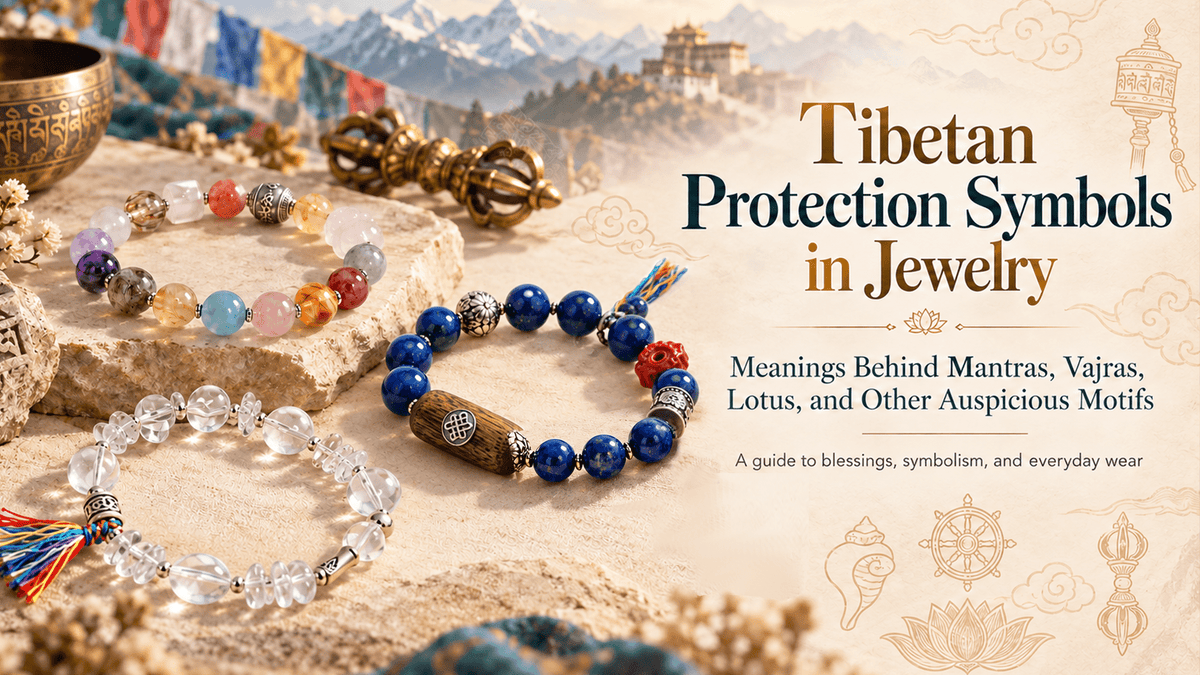
Traditional Tibetan beadwork and prayer beads commonly use materials such as agate, turquoise, coral, beeswax amber, and bodhi seeds. Contemporary bracelet designs offer more choices. The colors, sheen, and textures of different natural stones can all be a way to express your taste.

Traditional Tibetan gemstones including agate, turquoise, coral, and beeswax amber.
In this way of thinking, natural stones are understood to have different kinds of energy. Some feel quiet and understated, others steady and grounded, and others gentle and comforting. Different stones may appeal to people with different temperaments or at different points in their lives. Choosing a bracelet comes down to finding a material you enjoy and would happily wear over time.
Some people enjoy wearing several stones together. The different colors give the bracelet a soft, varied look and leave room for more than one interpretation. It suits someone who wants an easygoing piece to live with over time. It also goes with a range of everyday outfits and is easy to keep in rotation.

Harmonious multi-gemstone bracelet designed for versatile everyday wear and balanced energy.
Someone who tends to think things through again and again may be drawn to the deep color of smoky quartz. Its muted tones, paired with the Six-Syllable Mantra, can serve as a cue to slow down when your thoughts feel scattered. A glance at your wrist can be enough to give yourself a moment to pause.

Smoky quartz beads paired with the Six-Syllable Mantra for grounding and mental clarity.
Others prefer the clean, grounded look of black tourmaline. The dark beads are understated, with a visual solidity that suggests a clear sense of boundaries. Paired with a Zaki Lhamo motif, they can express hopes for protection and safety while giving the bracelet a restrained, timeless look.

Black Tourmaline & Enamel Zaki Lhamo Protection Bracelet, offering steadfast energy and protective boundaries.
Whatever stone you choose, a religious motif deserves care in how it is used. Preserving the basic form of the original image or lettering and staying true to its established meaning are simple ways to respect where it comes from.
The right material is personal. Each of us lives differently and has our own preferences for color, texture, and weight. Part of what makes a keepsake meaningful is how closely it can reflect the person who wears it.
6. Finding a Bracelet That Suits You
People often ask who might feel at home wearing a Tibetan bead bracelet that carries a prayer or wish.
Anyone can find meaning in one, and each person brings their own hopes to it. A bracelet like this is a quiet companion, and its meaning can grow as you come to understand the everyday hopes behind its symbols and their place in Tibetan folk tradition.
It may feel especially meaningful to people in these situations.
You spend a lot of time on the move or travel on your own and want a small keepsake to carry through life’s ups and downs.
Your thoughts often race, and you’d like a physical reminder to slow down and recite the Six-Syllable Mantra.
You appreciate Tibetan traditions and respect Tibetan Buddhist symbols, or you collect pieces with roots in a particular culture.
These bracelets can also be meaningful gifts.
When you give someone a Tibetan bead bracelet, what you’re passing along is a wish for their well-being. It comes from a tradition carried across generations on the Tibetan plateau, along kora paths and past mani cairns.
It can be a quiet gesture of support for a friend or loved one going through a difficult stretch. It can also suit someone who appreciates understated pieces and takes time to learn the stories behind them. With daily handling, the beads will develop a soft sheen, and the metal accents will gradually lose their original shine. The bracelet will show its age, and the wish it carries can stay with the person who received it.
Discover Amesha Sacred Tibetan Jewelry
Handcrafted natural gemstone bracelets infused with sacred mantras, protective blessings, and timeless Himalayan craftsmanship.
Explore Tibetan Collection →



Jätä kommentti
Kaikki kommentit moderoidaan ennen julkaisemista.
Tämä sivu on suojattu hCaptcha-tunnistuksella, ja hCaptchan tietosuojakäytäntöjä ja käyttöehtoja sovelletaan.